
Understand the market potential of people with disabilities
Purple Survey 2026 will help quantify and understand the disability market in Romania including purchasing power, consumption behaviour, unmet needs, access barriers, and revenue lost through inaccessibility.
- From inclusion as a social issue to measurable business opportunity.
WHY THIS MATTERS
Reframing inclusion as an economic factor.
Developed with academic and institutional partners, Purple Survey 2026 reframes disability inclusion from a perceived social cost into a measurable economic factor — directly relevant for ESG and CSRD reporting, HR and DEI, marketing, and digital experience teams.
- Market opportunity & consumer choice
- Productivity & workforce participation
- Revenue retention & conversion
- Risk management & regulatory compliance
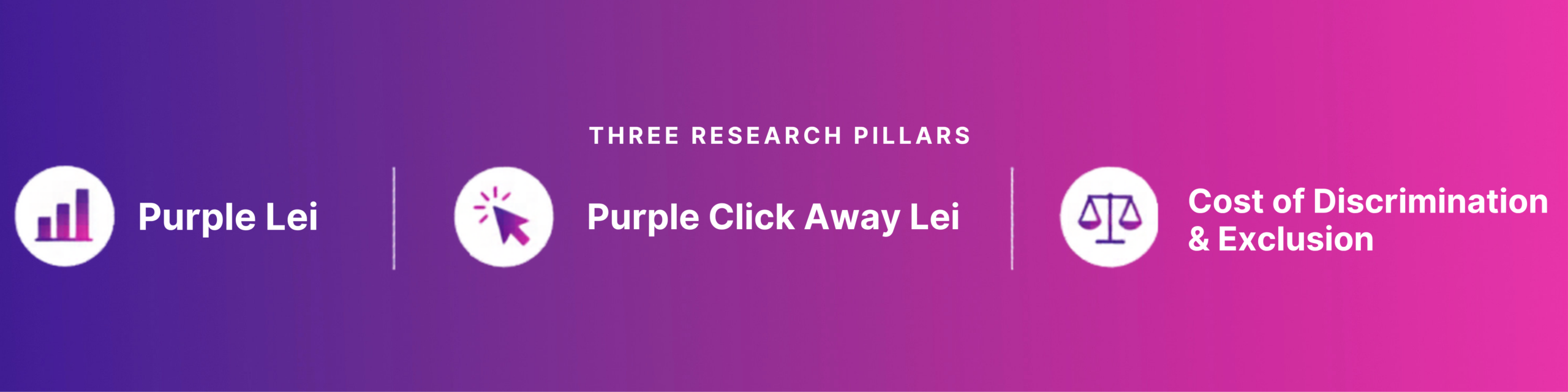
THREE RESEARCH PILLARS
One study. Three lenses on the economics of inclusion.
WHAT YOU'LL RECEIVE
Grant-standard deliverables.
Multi-source recruitment across RDCC corporate members, NGO beneficiaries, the AccessABILITY EXPO database, UPAS employees and targeted national outreach — with full GDPR compliance and transparent QA.
- Inception pack — methodology, sampling, ethics & GDPR
- Three technical briefs — one per research pillar
- Launch briefing, webinar & press-ready comms pack
- Anonymised dataset, codebook & QA memo
- Romania Common Report + board-ready summary
- Independent methodology, analysis & findings
CO-FUNDING MODEL
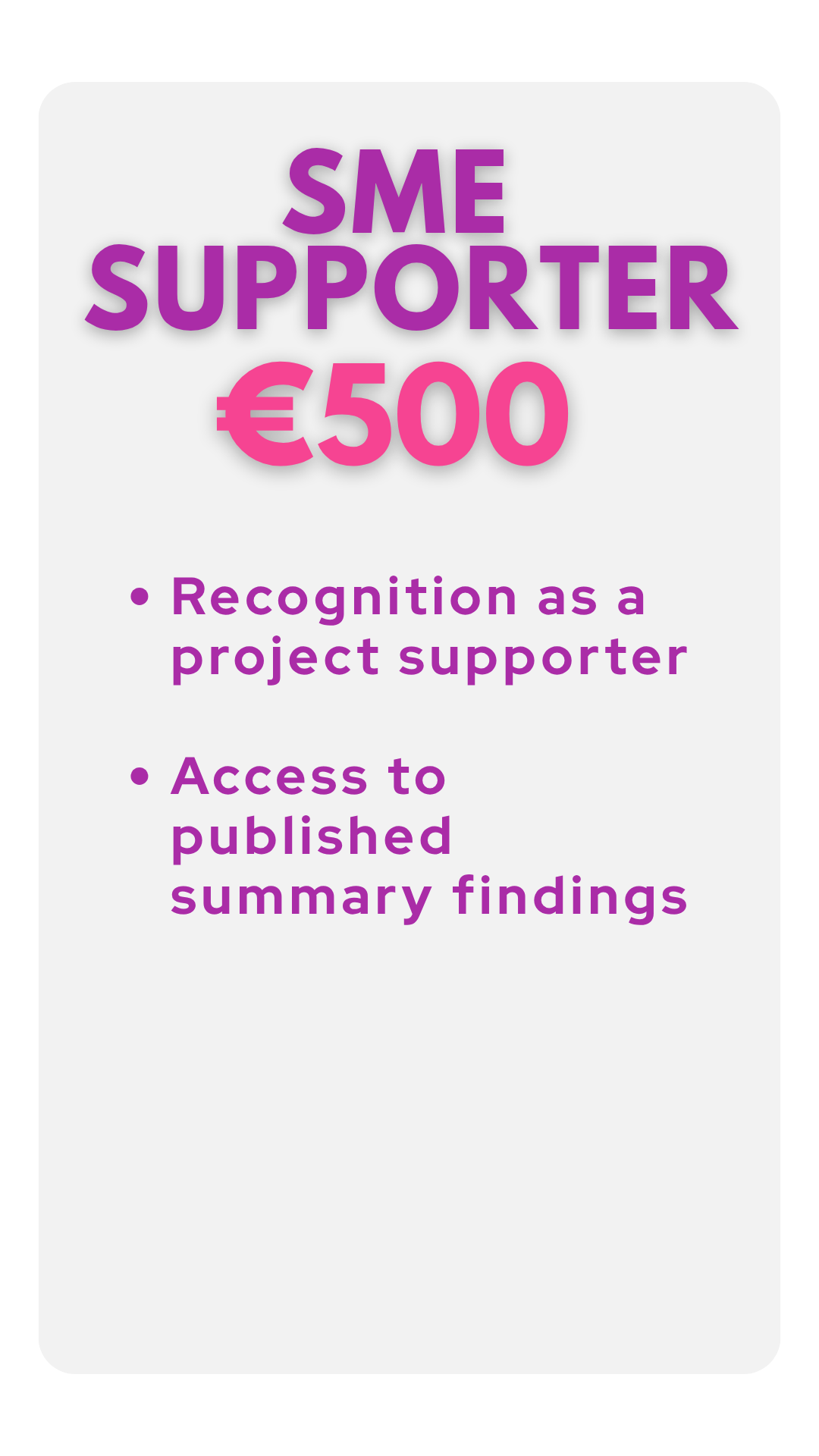
Participate at the level that's right for you.
We’re not asking every member to contribute equally — but for a shared commitment, with each organisation participating at the level most appropriate to its size, capacity and ambition.
FAQ
Questions, answered.
Everything you need to know about methodology, GDPR safeguards, the delivery timeline and what your organisation receives in return for co-funding.
Purple Survey 2026 is designed as a national, evidence-based quantitative study, supported by robust sampling, accessible fieldwork and economic modelling. The research is structured around three complementary components:
Purple Lei — Spending Power: estimating the purchasing power, consumption behaviour and access barriers of households that include persons with disabilities.
Purple Click Away Lei — Cost of Inaccessibility: estimating revenue lost when people abandon inaccessible digital services, physical environments or service journeys, including the effect on conversion, loyalty and retention.
Cost of Discrimination & Exclusion — Macro Impact: quantifying labour participation losses, productivity losses, under-consumption and increased dependency costs.
Recruitment is multi-source and may include RDCC corporate members, NGO beneficiaries and partners, the AccessABILITY EXPO database, UPAS employees, national outreach channels and targeted online recruitment. The recommended methodological baseline is a minimum of 1,200 completed interviews, with an optimal scenario of around 2,000 interviews to strengthen national estimates, subgroup analysis and economic modelling.
Where appropriate, a limited qualitative component, such as in-depth interviews, may also be used to support interpretation of findings and add human insight to the data.
Purple Survey 2026 is designed as a national, evidence-based quantitative study, supported by robust sampling, accessible fieldwork and economic modelling. The research is structured around three complementary components:
Purple Lei — Spending Power: estimating the purchasing power, consumption behaviour and access barriers of households that include persons with disabilities.
Purple Click Away Lei — Cost of Inaccessibility: estimating revenue lost when people abandon inaccessible digital services, physical environments or service journeys, including the effect on conversion, loyalty and retention.
Cost of Discrimination & Exclusion — Macro Impact: quantifying labour participation losses, productivity losses, under-consumption and increased dependency costs.
Recruitment is multi-source and may include RDCC corporate members, NGO beneficiaries and partners, the AccessABILITY EXPO database, UPAS employees, national outreach channels and targeted online recruitment. The recommended methodological baseline is a minimum of 1,200 completed interviews, with an optimal scenario of around 2,000 interviews to strengthen national estimates, subgroup analysis and economic modelling.
Where appropriate, a limited qualitative component, such as in-depth interviews, may also be used to support interpretation of findings and add human insight to the data.
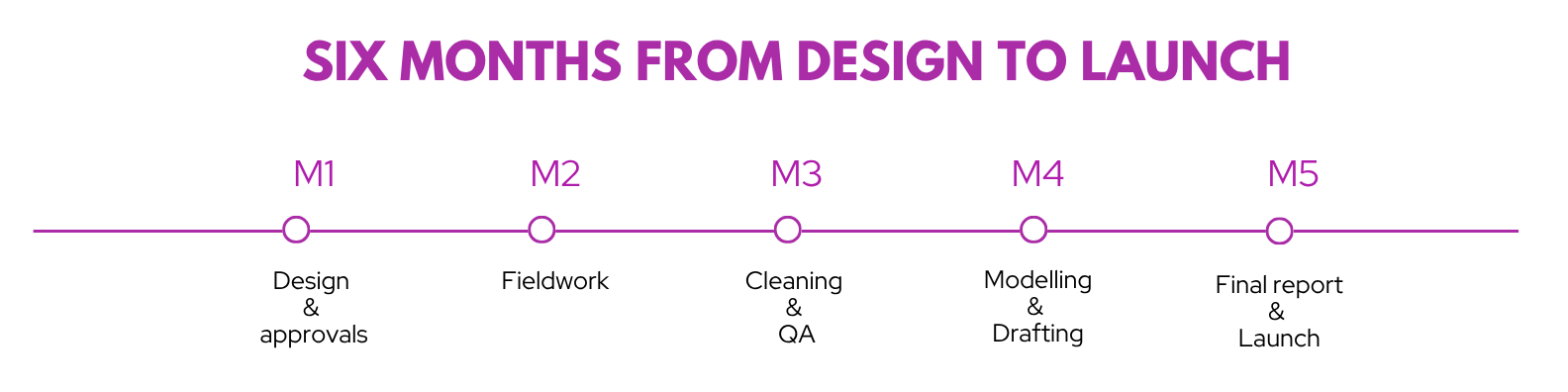
The project is planned over a six-month delivery cycle.
Month 1 focuses on design, approvals, methodology finalisation, sampling plan, ethics and GDPR protocols, and the monitoring and evaluation plan.
Months 2 and 3 are dedicated to fieldwork and respondent recruitment.
Month 4 covers data cleaning, validation, weighting or calibration where relevant, and quality assurance.
Month 5 focuses on modelling, analysis, technical briefs and report drafting.
Month 6 is dedicated to the final Common Report, board-ready executive summary, sponsor briefings, launch preparation and public communication.
Sponsors receive a clear project structure from inception so progress, milestones and deliverables remain transparent throughout.
Sponsors receive a combination of research access, visibility and practical insight depending on their sponsorship tier.
Core research outputs include the inception pack, final methodology, sampling plan, ethics and GDPR protocols, M&E framework, clean anonymised dataset, codebook, QA memo, three technical briefs, the Common Report for Romania, a board-ready executive summary, and launch or communications materials.
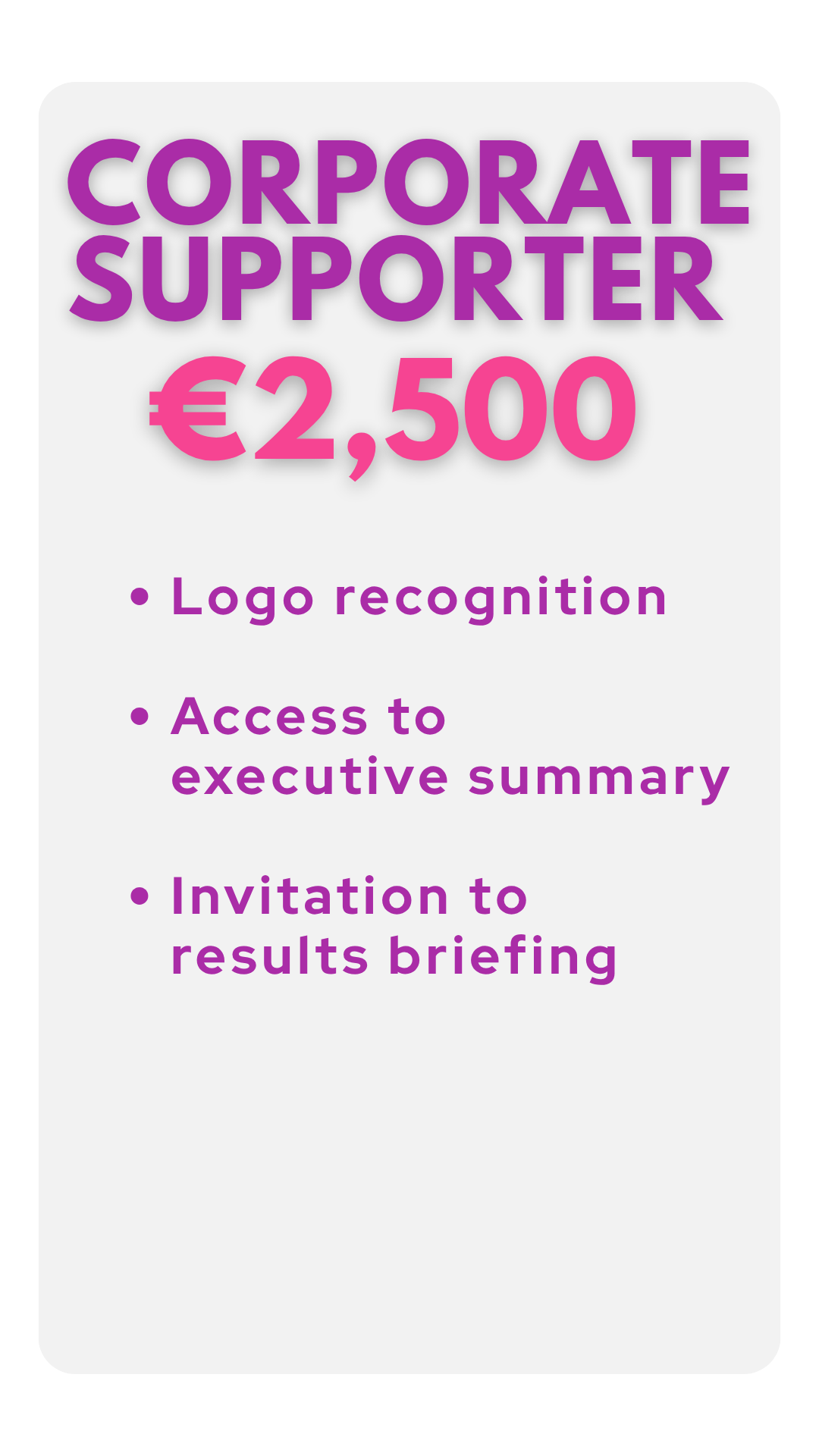
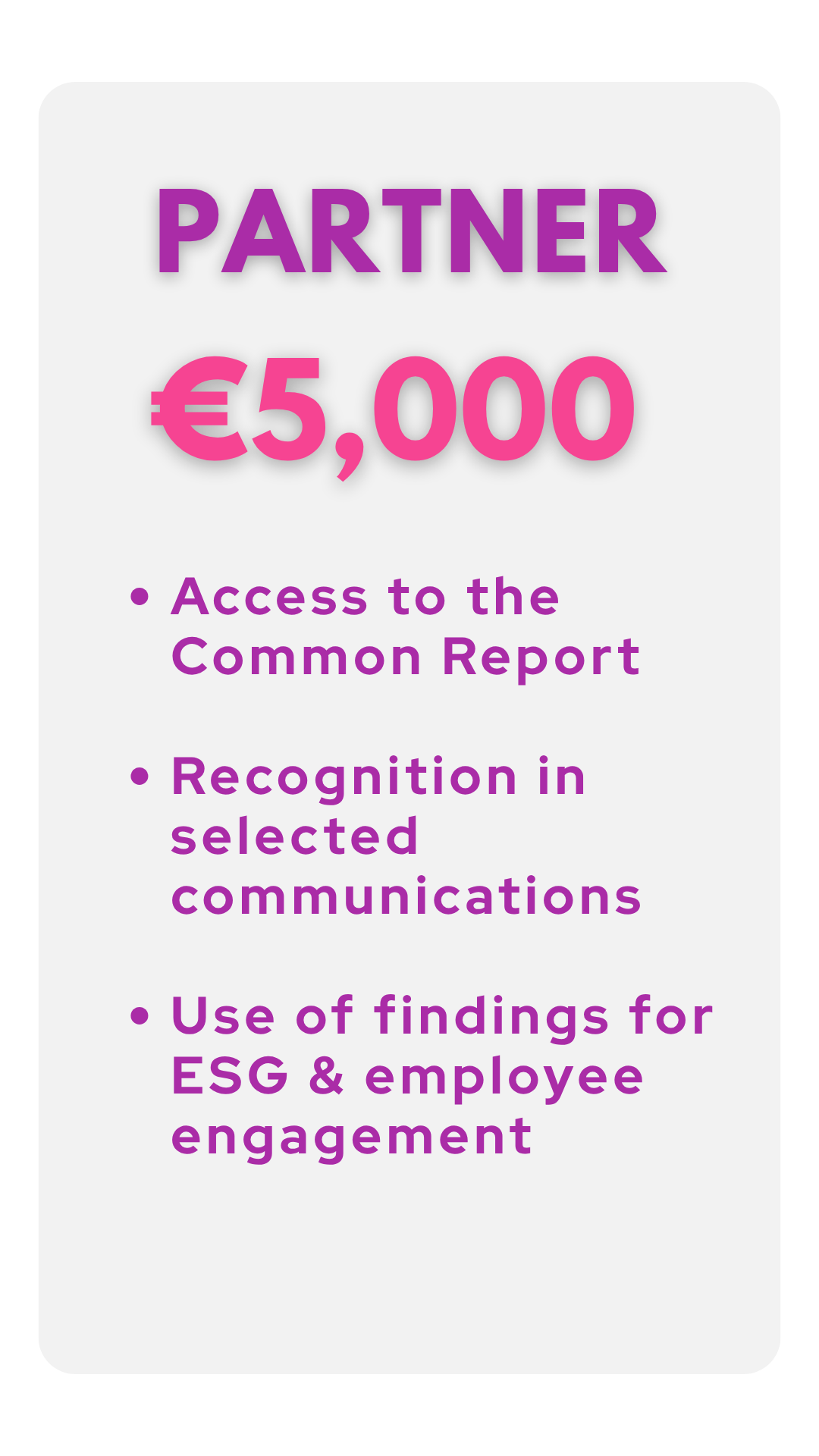
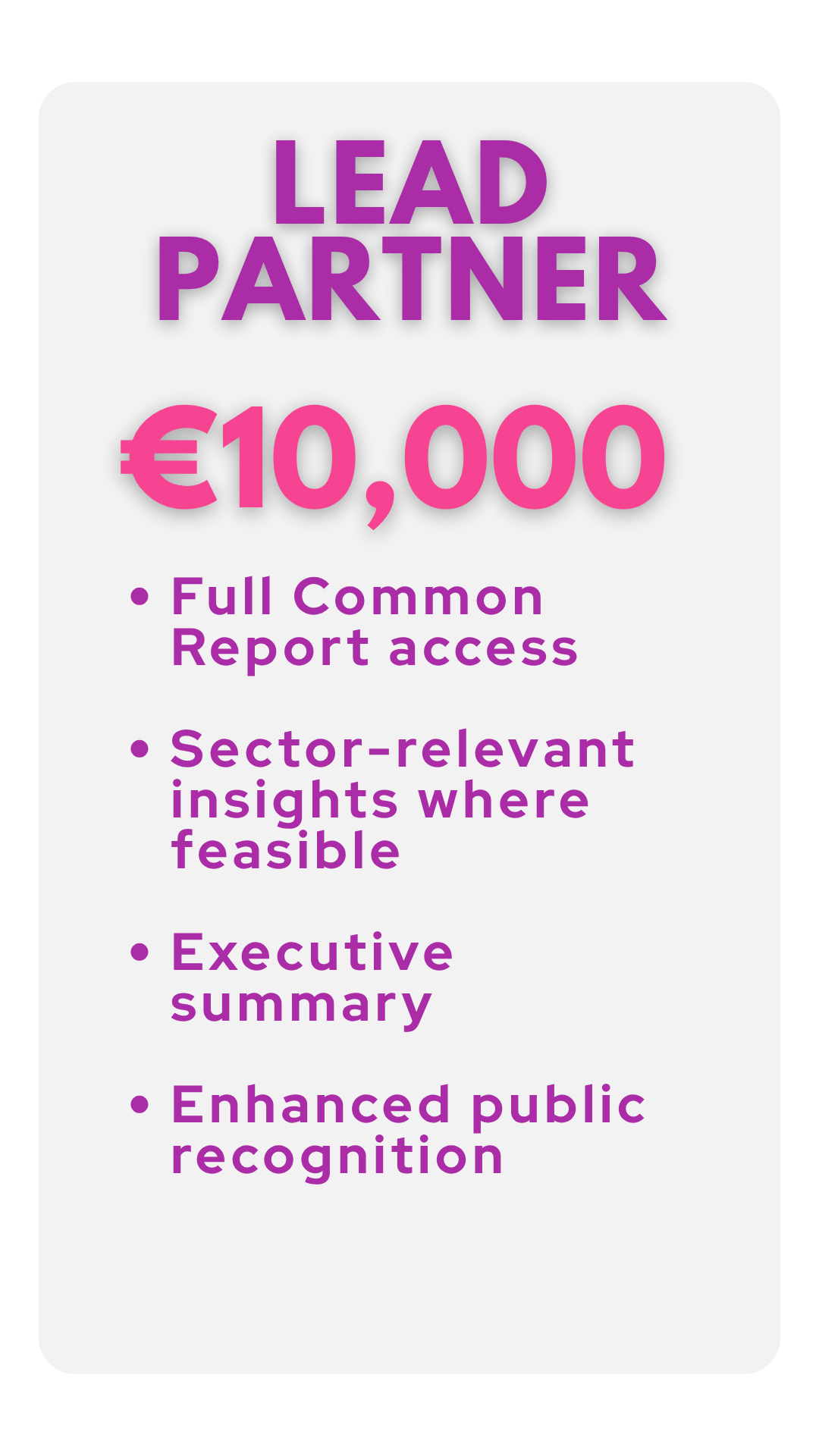
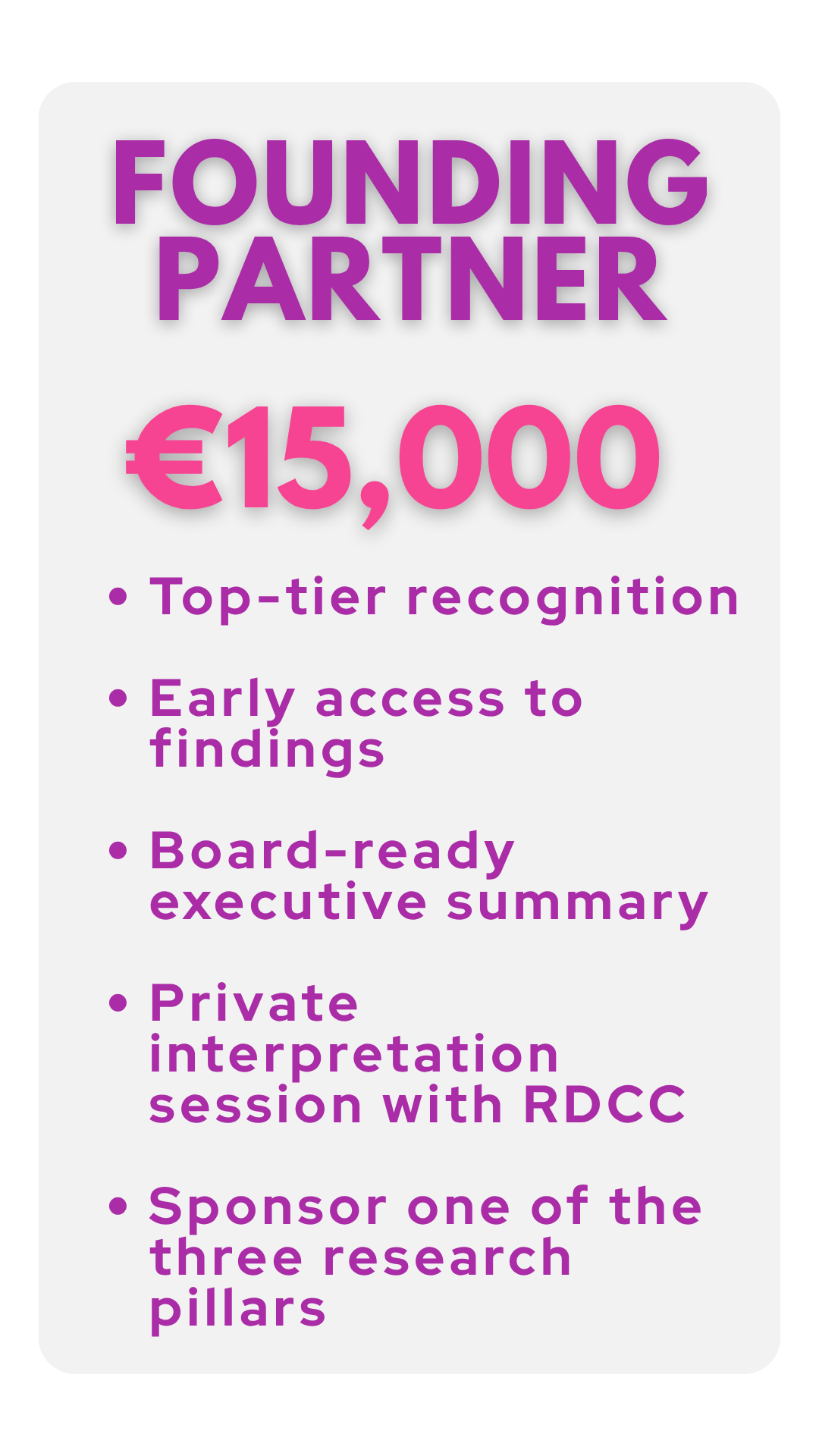
At entry level, SME Supporters receive access to published summary findings. Corporate Supporters receive logo recognition, the executive summary and invitation to the results briefing. Partners receive access to the Common Report and may use the findings for ESG narratives, internal engagement and employee awareness. Lead Partners receive full report access, sector-relevant insights where feasible, enhanced public recognition and use of findings for ESG, CSRD, sustainability and corporate responsibility communication. Founding Partners receive early access to key findings, a board-ready executive summary, a private interpretation session with RDCC and research partners, and the option to be recognised as the enabling sponsor of one full research pillar.
Depending on feasibility and sponsorship level, sponsor-specific outputs may also include accessibility maturity indicators, identification of major digital, physical or service-journey friction points, and a high-level 12–18 month action roadmap linked to measurable outcomes.
Yes. Purple Survey 2026 is designed to provide credible, Romania-specific evidence that companies can use to strengthen ESG, CSRD, sustainability, corporate responsibility, HR, DEI, customer experience, digital accessibility and stakeholder engagement work.
The findings can support internal strategy, board presentations, sustainability narratives, employee engagement, accessibility improvement plans and public communication. They should be used as evidence-based research input and contextual support, not as a replacement for each company’s own legal, audit or reporting obligations.
No. Sponsorship enables the study to be delivered, but it does not influence the research methodology, respondent recruitment, data collection, analysis, interpretation or findings.
Purple Survey 2026 is structured as an independent research initiative. Sponsors may receive visibility, access to outputs and interpretation support according to their tier, but they do not shape the conclusions. This independence is essential to protect the credibility of the study and ensure that the findings can be trusted by companies, institutions, public stakeholders and civil society partners.
EXPRESS INTEREST
Together, let's turn inclusion into evidence.
Tell us about your organisation and your preferred level of participation. We’ll follow up with next steps — and for those considering a larger commitment, we welcome conversations about becoming a Founding Partner of one of the three research pillars.