
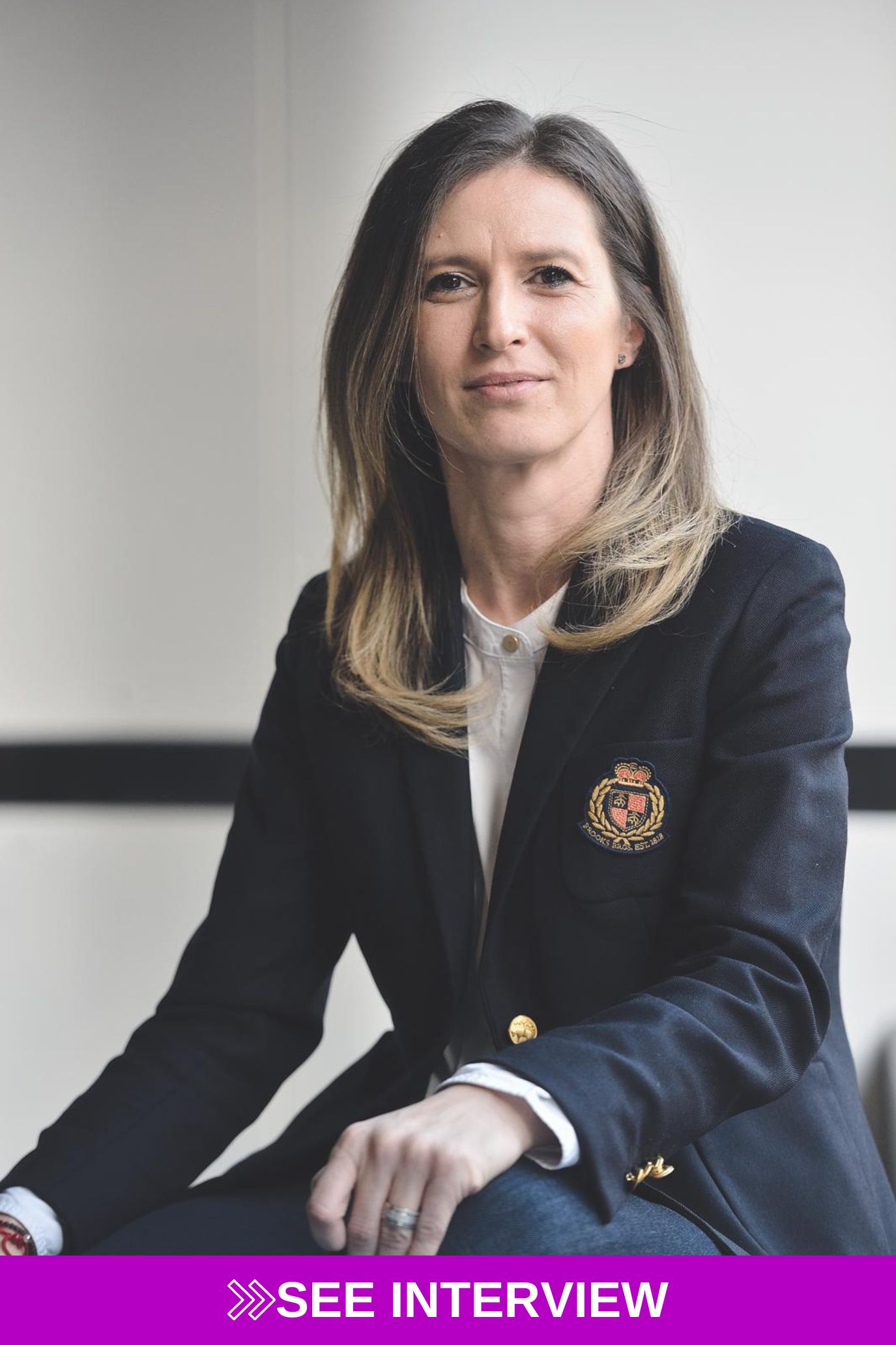
1. As Chief Culture Officer at UiPath, how does your work… connect with RDCC’s mission?
At UiPath, my work has always been centered around one belief: culture is not a “soft” topic — it is a strategic capability. The way organizations develop leaders, create belonging, and translate values into behaviors directly impacts innovation, performance, resilience, and trust.
This strongly aligns with RDCC’s mission of fostering inclusive economic growth and corporate innovation. In today’s world, organizations cannot innovate sustainably without creating environments where diverse perspectives are heard, respected, and empowered. Whether through leadership development, belonging initiatives, or organizational transformation, my role has been about helping people and organizations grow in ways that are both high-performing and deeply human.
2. What motivated you to reapply for a position on the RDCC Board of Directors…?
I chose to reapply because I genuinely believe RDCC plays a unique and important role in shaping the future of business leadership in Romania. It is one of the few spaces where organizations come together not only to exchange ideas, but to influence behaviors, standards, and societal progress.
My previous experience on the Board strengthened my conviction that dialogue, education, and community matter — especially in increasingly polarized and rapidly changing environments. I also feel a personal responsibility to contribute with the perspective of a Romanian-born global company operating at the center of digital transformation and AI-driven change.
3. As an RDCC Board Member, what are your main objectives for this mandate?
One of my key objectives is to help strengthen RDCC as both a learning platform and a trusted community for leaders navigating complex transformation. I would like to support initiatives that make inclusive leadership practical, measurable, and actionable for organizations of different sizes and maturity levels.
I also hope to contribute to expanding the member network through meaningful partnerships, executive learning experiences, and peer-to-peer dialogue. Finally, I believe RDCC can continue playing an important role in raising awareness around ED&I not as a compliance topic, but as a driver of innovation, collaboration, and long-term business resilience.
4. How can leaders embed inclusive behaviors into day-to-day decision-making…?
Inclusion becomes real not through statements, but through habits and everyday behaviors. Leaders embed inclusion when they intentionally create space for different voices, encourage constructive disagreement, give honest feedback with care, and make decisions transparently.
In periods of rapid AI and digital transformation, this becomes even more important because uncertainty naturally increases fear, resistance, and fragmentation. Inclusive leaders help teams navigate change by building trust, psychological safety, clarity, and shared purpose. Technology may accelerate business, but human connection remains what enables people to adapt and perform together.
5. What responsibilities do technology companies have in ensuring AI contributes to more inclusive workplaces and societies?
Technology companies carry enormous responsibility because technology shapes not only productivity, but increasingly how people work, learn, interact, and access opportunities. AI and automation should augment human potential, not diminish human dignity.
This means organizations must think carefully about ethics, transparency, reskilling, accessibility, and equitable access to opportunity. It also means leaders must stay deeply connected to the human impact of transformation. Innovation without responsibility creates distrust; innovation with empathy and accountability can create progress that benefits both business and society.
6. What practical approaches can companies use to move from ED&I awareness to measurable actions…?
Awareness is only the first step. Sustainable culture change happens when organizations translate values into systems, behaviors, and leadership expectations.
This can include embedding inclusive leadership behaviors into performance conversations, leadership development, hiring practices, talent reviews, succession planning, and employee listening mechanisms. It is also important to measure progress consistently — not only through representation metrics, but through trust, belonging, engagement, and leadership behaviors experienced by employees day to day.
Most importantly, culture change happens when leaders role-model the behaviors visibly and consistently themselves.
7. How can RDCC further support its members through executive training, advisory services…?
I believe RDCC has the opportunity to become an even stronger catalyst for practical leadership transformation. Many organizations are looking not only for inspiration, but for frameworks, tools, peer learning, and actionable guidance.
This could include executive education programs, certification pathways, communities of practice for employee networks, advisory support, and facilitated conversations around complex leadership topics such as AI, generational differences, polarization, and organizational trust. Sometimes the most valuable role a community can play is creating safe spaces for honest dialogue and shared learning.
8. Looking ahead, what opportunities and challenges do you see for Romania’s business environment…?
Romania has an extraordinary opportunity to position itself at the intersection of talent, technology, innovation, and entrepreneurship. We already see globally recognized companies, highly skilled professionals, and increasing openness toward transformation and digitalization.
At the same time, one of the biggest challenges will be maintaining societal trust and human connection during periods of accelerated change. Organizations that succeed will likely be those capable of combining technological advancement with inclusive leadership, adaptability, ethical responsibility, and continuous learning.
In the long run, competitiveness will not be defined only by technology itself, but by the quality of leadership and culture surrounding it.