
Why the Future of Tech Leadership Depends on Who Gets to Lead Now
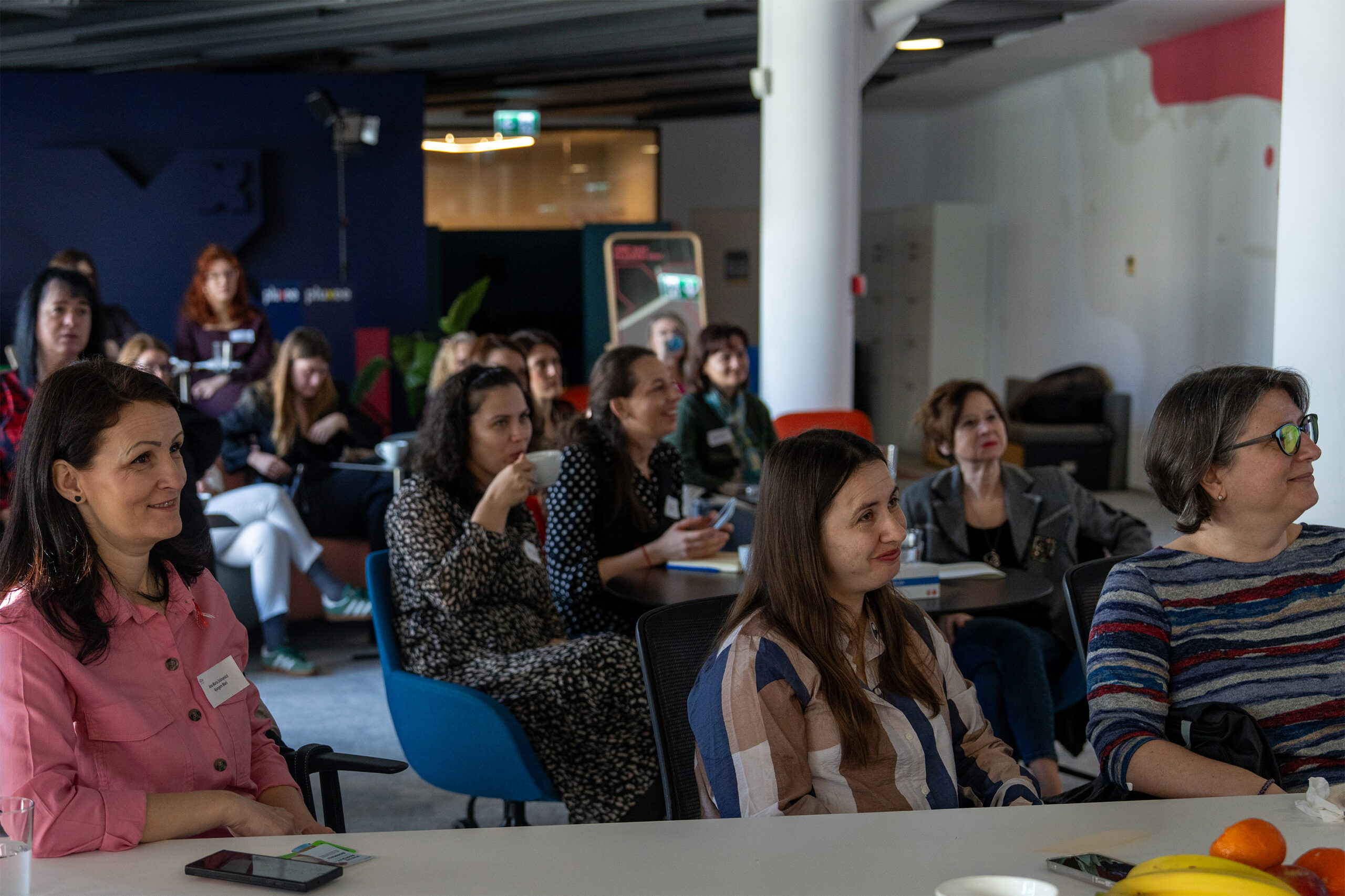
At RDCC’s Breakfast Talk Series in Bucharest, the focus was clear: advancing gender equality, strengthening women’s leadership in tech and digital companies, and turning inclusion into a real competitive advantage for the economy of tomorrow.
On March 11, 2026, in Bucharest, the Romanian Diversity Chamber of Commerce brought together business leaders and professionals for a conversation that felt both timely and quietly urgent. Framed under RDCC’s Breakfast Talk Series, the event focused on three linked priorities: celebrating women in the workplace, advancing gender equality and empowerment, and supporting women in leadership across tech and digital companies. Powered by RDCC corporate members Pluxee and Orange, and held in strategic partnership with CPI Property Group, an RDCC founding member, the gathering signaled something bigger than a networking breakfast. It was a conversation about economic direction — about who gets to shape the markets, companies, and leadership cultures of the future.
That framing matters because RDCC’s mission has never treated inclusion as a side conversation. The Chamber positions diversity, fairness, innovation, and future-ready business thinking as part of the same agenda: inclusive economic growth that works not only for individuals, but for companies and markets as well. In sectors like tech and digital, where talent shortages, AI adoption, and rapid transformation are already redefining competitiveness, that message lands with particular force.
The event’s opening note made that clear. Gender equality was not presented as a moral add-on to business strategy, but as a condition for better leadership and stronger decision-making in the digital economy.

As Florentina Ciontea, Human Resources & CSR Director, Pluxee Romania, put it: “In a digital economy that keeps reinventing itself, leadership cannot afford to look the same year after year; when we widen access, we don’t just do what is fair, we make organisations more capable of understanding people, adapting faster, and growing with purpose.”
From there, the discussion moved inward — toward the lived realities behind the leadership gap. A Journey Through the Self for Women in STEM, delivered by Flavia Tioc – Senior Trainer Knowledge Centre RDCC, explored which are the main intrinsic or extrinsic blockers of women’s promotion such as self-doubt and Glass Ceiling and how to overcome those through cultivating self-worth and better identifying and strengthening their strenghts as well as acquiring the self-efficacy multiplying skills such as critical thinking, emotional intelligence and the ability to add value beyond automated systems.
That distinction is central to RDCC’s wider case for inclusion. Inclusive leadership is often described as a values issue. In reality, it is also a competitiveness issue. Romania already has a notable foothold in the conversation: according to the event materials, the country ranks third in the share of women working in IT&C, with women making up 26.2 percent of specialists. And yet only one in five girls studies computer science. That tension tells a larger European story. Early gains do not automatically become a sustainable pipeline. And when that pipeline narrows, the losses are not just personal or symbolic. They are economic.
The most compelling moments of the morning came from that intersection between personal journey and systemic design. In the section focused on women in digital leadership, the tone shifted from diagnosis to momentum.
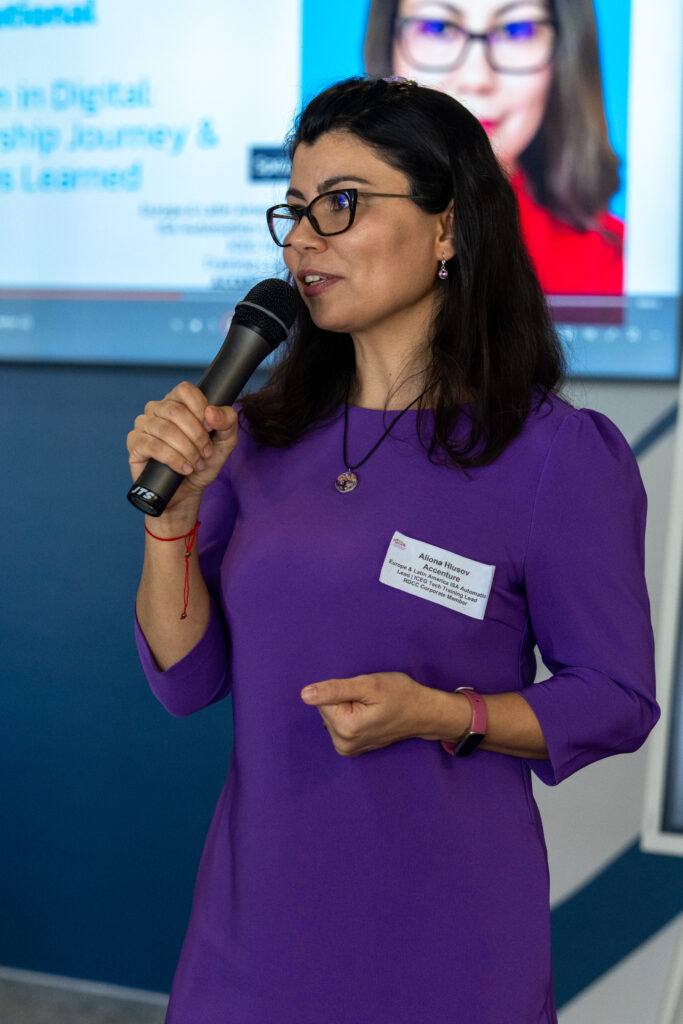
Aliona Hlusov, Europe & Latin America ISA Automation Lead and ICEG Tech Training Lead at Accenture, captured that spirit powerfully: “The journey into digital leadership is never only about mastering technology; it is about building confidence, staying curious, and creating spaces where other women can see that they belong, contribute, and lead.”
That idea — that leadership in tech is as much about confidence, community, and visibility as it is about technical depth — resonates far beyond a single event. For companies operating across European and global markets, diverse leadership teams are better equipped to challenge assumptions, understand customers, and navigate uncertainty. In industries where innovation cycles are short and the cost of blind spots is high, broadening leadership pathways is not cosmetic. It is strategic. RDCC’s point, made again and again through the event’s structure, is that women in leadership are not simply essential for fairness or representation. They are essential for building smarter, more resilient organizations.
The conversation grew even more practical in its final stretch, when attention turned from individual progression to organizational responsibility. If intention is where many inclusion strategies begin, governance is what determines whether they endure. That was the force behind the session on enabling women’s progression through governance and talent systems: the recognition that real change does not happen because a company says the right things once a year. It happens when hiring, development, succession planning, performance criteria, and leadership accountability all start telling the same story.
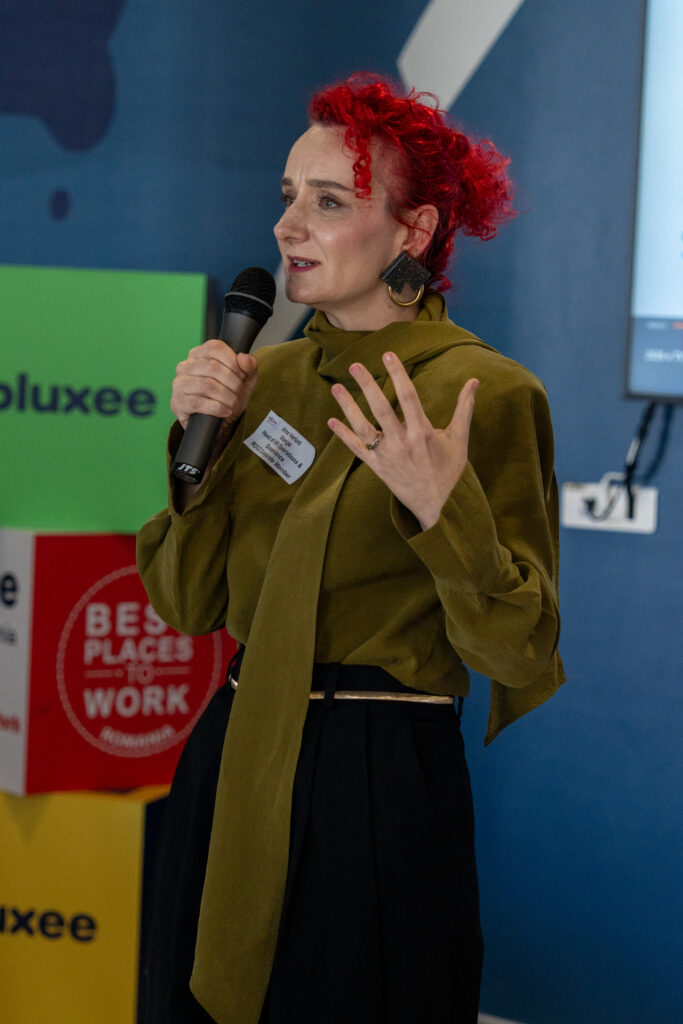
Irina Verioti, Head of HR Operations & Governance at Orange, brought that point into sharp focus “Progress for women becomes real when inclusion is not left to good intentions, but is built into the way the organisation hires, develops, promotes, and supports people every day; that is when fairness starts to create lasting business value.”
’’That, in many ways, was the most forward-looking message of the event. The value of talent in STEM is changing. Technical excellence still matters, of course. But increasingly, so do judgment, adaptability, emotional intelligence, ethical reasoning, and the ability to work across functions and alongside AI. In that environment, leadership can no longer be defined by legacy patterns alone. The strongest businesses will be the ones capable of recognizing a broader range of strengths — and designing systems that do not leave that talent underused.
This is why RDCC’s Breakfast Talk Series feels relevant beyond a single morning in Bucharest. It speaks to a larger economic truth that many organizations are only beginning to confront: future-ready businesses will be built not only by those that invest in the newest technologies, but by those that invest in people early, fairly, and intelligently. Diversity, in that sense, is not a communications theme. It is market infrastructure. Inclusion is not separate from innovation. It is one of the conditions that makes innovation sustainable.
And that may be the most important takeaway of all.
The future of competitiveness — in Romania, across Europe, and globally — will not be decided only by who moves fastest on digital transformation. It will also be shaped by who understands that leadership itself must evolve. RDCC’s message is both practical and ambitious: inclusive economic growth is not aspirational language for some distant tomorrow. It is a business roadmap for right now. And in tech especially, the organizations that act on that insight first may be the ones best prepared to lead what comes next.