
Human Rights Are No Longer Off the Balance Sheet
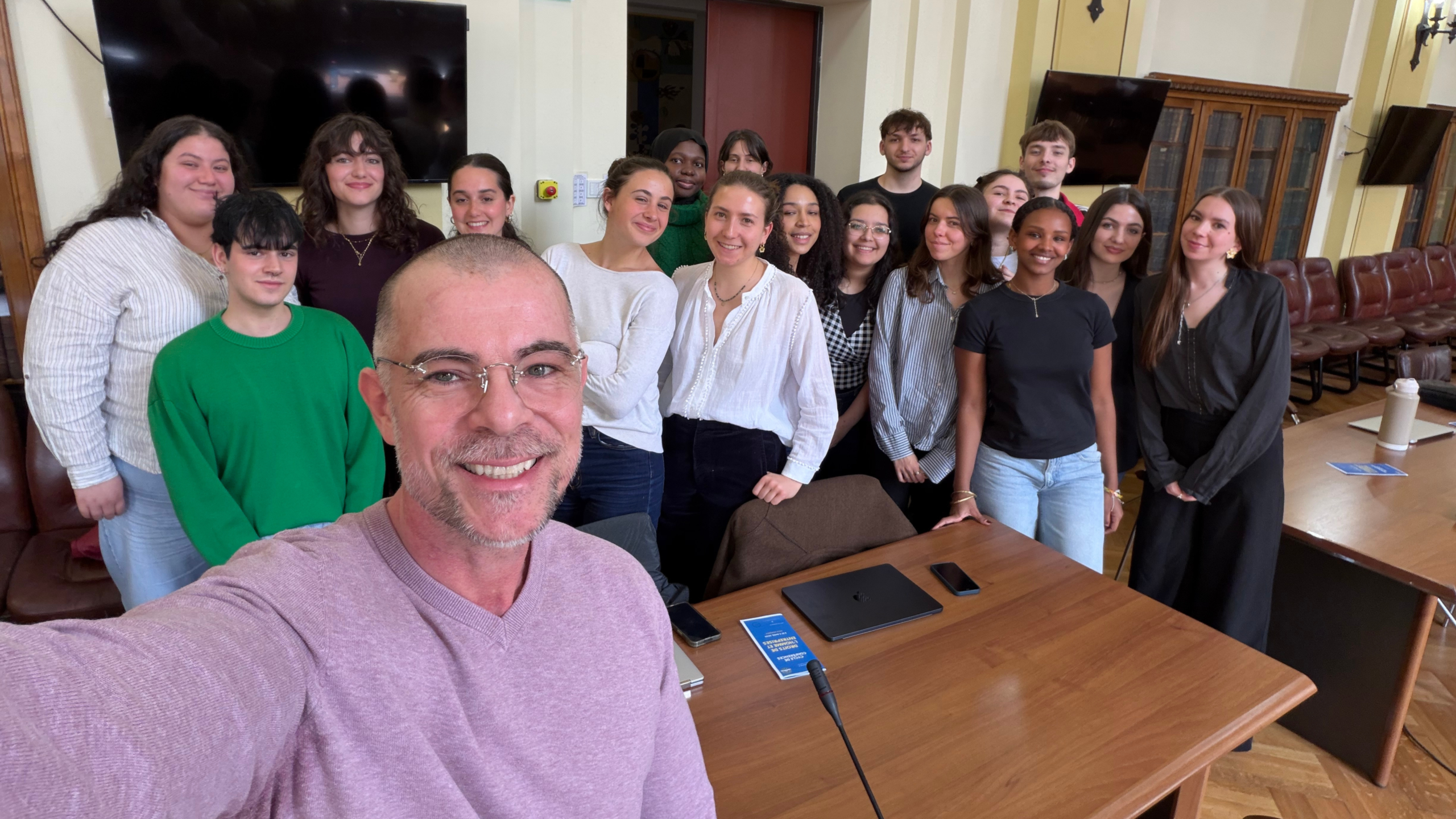
Following my intervention at the Human Rights and Business conference in Bucharest, one conviction stands out: improving business practices through a human rights lens is not only a legal or ethical obligation, but also a path toward more resilient, responsible, and sustainable organizations.
When I spoke in Bucharest at the Human Rights and Business conference, organized by La Clinique Juridique de la Sorbonne à Bucarest and Le Collège Juridique Franco-Roumain d’Études Européennes, I was struck by a reality that goes far beyond the academic or legal sphere: human rights are no longer a peripheral issue for business. They have become a strategic one.
That is precisely why this conversation matters so much. Over the course of two days, the conference explored corporate responsibility, access to remedy, just transition, and, above all, a question that speaks directly to RDCC members: what role should economic actors play, in practical terms, in advancing human rights?
For me, the answer is clear. For too long, human rights were treated by the business world as a secondary issue. Important, certainly. But external. Something for governments, NGOs, and lawyers. Not for executive teams. Not for procurement. Not for product teams. Not for commercial functions. Not for strategy.
That era is over.
Today, whether they acknowledge it or not, companies are already at the center of this issue. They shape working conditions, supply chains, access to employment, representation in leadership, recruitment practices, internal culture, and even the way people see themselves through the messages, images, and norms businesses help circulate. Companies can no longer credibly claim: this is not our role. Their role already exists, because their impact already exists.
That is the reality I wanted to underscore in my intervention. I am neither a lawyer nor an academic. I am an entrepreneur, a builder, and, at times by necessity, an activist. And it is precisely at the intersection of those roles that, in my view, a crucial part of today’s human rights agenda is being shaped. For a long time, companies viewed this topic as something outside their core activity. But the truth is both simple and uncomfortable: businesses are part of the problem — and therefore must also be part of the solution.
For RDCC members, this conversation is far from abstract. It goes directly to how we think about performance, governance, and growth. A company can be profitable, visible, and outwardly modern, while still reproducing exclusion, representational bias, or structural inequalities. We have all seen the gap between well-worded commitments and much more questionable practices. That gap is not a side issue. It is the issue.
This is precisely the gap the RDCC was created to address. As I noted in my intervention, when we launched this initiative with committed partners, we started from a simple observation: companies were already talking about diversity, inclusion, and equality, but very few knew how to embed those principles meaningfully into their decisions, systems, and strategy. So we set out to do something simple, yet fundamental: make human rights an economic issue. That means helping companies structure inclusive policies, measure their real impact, create standards, and demonstrate that inclusion is not only the right thing to do — it is also a driver of performance.
This is where the debate becomes truly interesting. For a long time, it seemed obvious that human rights were primarily the responsibility of states. And that remains true: governments are the first guarantors of fundamental rights. But that is no longer enough to describe the world as it is. Today, decisions made inside a company — about hiring, campaigns, products, suppliers, digital tools, pay policies, accessibility, or internal evaluation systems — can have very real consequences for dignity, equality, and people’s ability to participate fully in economic life.
In other words, businesses do not enter the human rights conversation because of ideology. They enter it because of impact.
And that impact now has to be addressed with maturity.
It starts with a shift in posture. Human rights can no longer be treated as an add-on, a chapter in an annual report, or a responsibility delegated to a peripheral department. They need to be integrated into the heart of decision-making. Not after the fact, when reputational risk emerges, but upstream, when priorities, incentives, success criteria, and trade-offs are being defined.
In practical terms, that means several things.
First, training. An organization does not transform its practices simply by displaying values on a wall or in a presentation deck. It transforms them when its people understand the issues, identify blind spots, and know how to translate principles into daily decisions.
Second, measurement. What is not measured tends to remain decorative. If a company claims to be acting on equality, diversity, or inclusion, it must be able to look honestly at its own data, gaps, progress, and inconsistencies.
It also means collaboration. With affected communities, experts, institutions, civil society, and business partners. Companies make real progress when they move beyond self-congratulation and embrace listening and co-creation.
And finally, it means aligning values with incentives. This is critical. Organizations truly change when internal incentives stop pitting performance against equity, results against responsibility, growth against coherence. As long as human rights are seen as a constraint, they will remain peripheral. Once they are understood as a lever for trust, innovation, attractiveness, and resilience, they move to the center of the business agenda.
This conviction has guided the RDCC from the very beginning. We are not here to moralize the market. We are here to help it evolve. To become more honest about its responsibilities, but also more ambitious about what it can achieve when economic performance, fairness, and long-term vision are better aligned.
Because this must be said clearly: an organization that takes human rights seriously is not weakened by constraint. More often, it is better prepared. Better prepared for talent expectations. Better prepared for the requirements of international partners. Better prepared for regulatory shifts. Better prepared for reputational crises. Better prepared, above all, to endure.
In an economic environment where uncertainty is becoming the norm, resilience no longer depends only on quarterly performance or operational efficiency. It also depends on the quality of an organization’s human foundations. On its ability to build trust. To prevent risks rather than merely absorb them. To create an internal culture that is consistent with what it promises externally. To make responsibility a structural advantage, rather than a last-minute reaction.
That is why I believe human rights must now be understood as a language of governance, not merely as an ethical register. They compel companies to ask better questions: who benefits from our decisions? who bears the cost? who remains invisible in our systems? what inequalities are we reproducing without seeing them? and above all, what kind of organization do we want to build over the next five, ten, or fifteen years?
For RDCC members, the message is clear. The issue is no longer whether human rights belong in business. The issue is how seriously we are prepared to integrate them into the way we lead our organizations.
That is where the difference lies between companies that simply adapt their messaging and those that truly transform their practices.
That is also where, in my view, real economic modernity begins: in understanding that human rights are neither a luxury, nor a compliance box, nor a passing governance trend. They are a marker of maturity. A test of coherence. And increasingly, a source of resilience.
At its core, the message I wanted to bring to Bucharest is the same one I want to leave with our community today: improving business practices through a human rights lens is not only about reducing risk or meeting an obligation. It is about building organizations that are smarter, more responsible, and more sustainable.
And in a world where trust is becoming a rare asset, that may make all the difference.