
What Capital Clean Proved At AccessABILITY Expo: Inclusion Becomes Stronger When It Enters The Supply Chain
After making an impact at AccessABILITY Expo 2025, Capital Clean is returning for the third edition on 22–23 October 2026 — this time as part of RDCC’s new Sustainable Procurement Ecosystem zone, where inclusive suppliers and corporate buyers can turn social impact into real business opportunity.
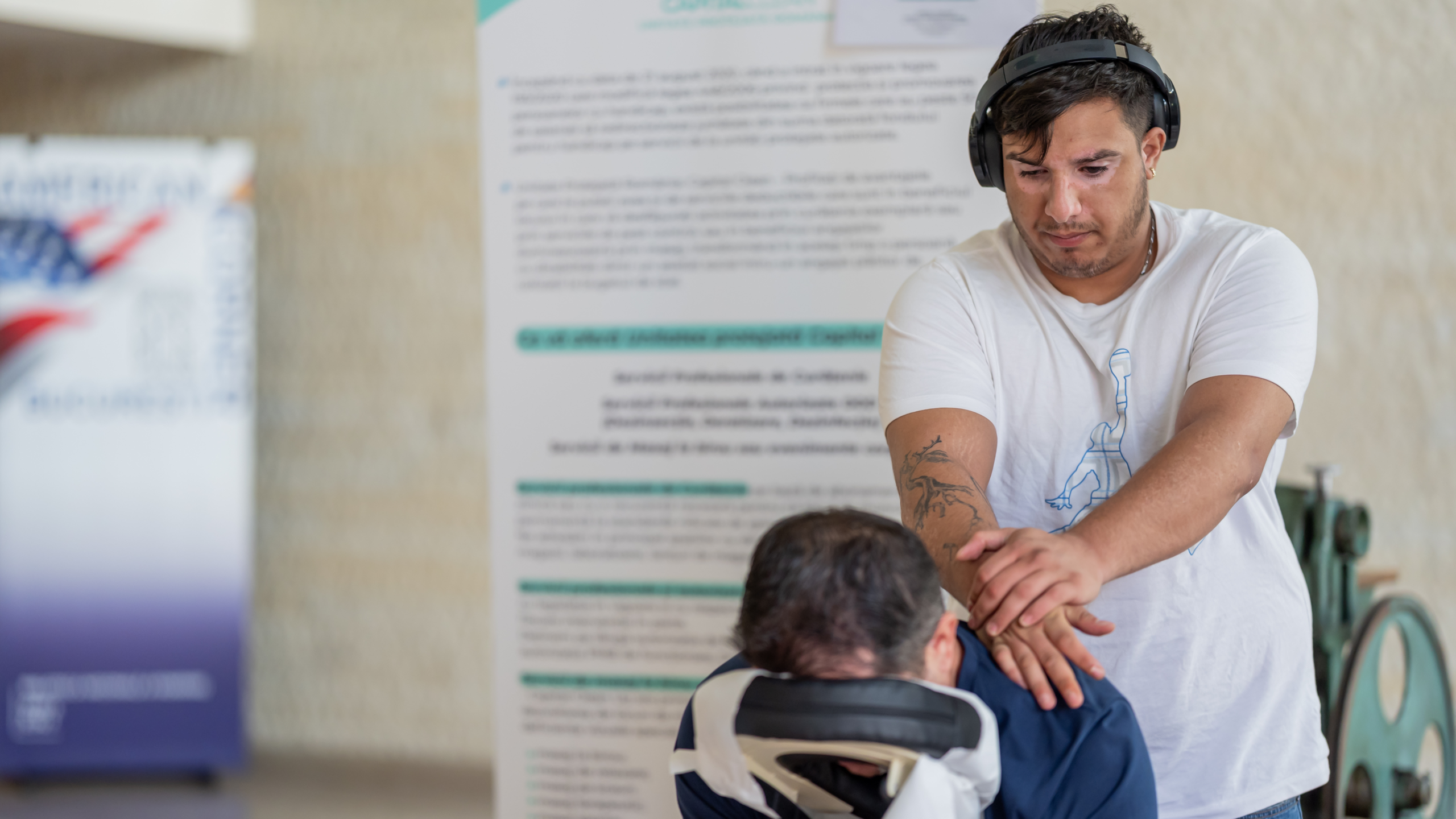
At AccessABILITY Expo 2025, Capital Clean did something deceptively simple: it offered free professional massages to participants.
For visitors moving through a space dedicated to accessibility, employment, innovation and inclusion, the service was immediate and memorable. It gave people a moment to rest, to connect and to experience the professionalism of visually impaired massage specialists in a setting built around practical accessibility solutions.
But the real message went far beyond wellbeing.
Capital Clean’s participation showed what can happen when an authorised protected unit steps into the right business ecosystem. It demonstrated that UPAs are not only social-impact organisations. They are service providers, employers, innovators and potential suppliers for companies that want to make inclusion part of how they buy.
That is the opportunity AccessABILITY Expo 2026 — and RDCC’s new Sustainable Procurement Ecosystem, launching at the Expo this year — will open to other protected units and inclusive suppliers across Romania.
For too long, disability inclusion has often been treated as a compliance issue, a charity issue or an HR issue. Capital Clean’s presence at the expo challenged that narrow view. Its stand connected inclusion with practical services companies already need: cleaning, disinfection, disinsection and deratization, landscaping, green-space maintenance and professional office massage.
As an authorised protected unit, Capital Clean also gives eligible companies a route to redirect disability-fund obligations into real workplace services while supporting employment opportunities for persons with disabilities.
In other words, Capital Clean did not arrive at AccessABILITY Expo asking for sympathy. It arrived with a value proposition.
“Capital Clean helps organisations turn compliance into action. Through our Protected Unit model, companies can redirect eligible disability-fund obligations into essential workplace services while supporting employment for persons with disabilities. AccessABILITY Expo gives us the opportunity to show that inclusive procurement can be practical, measurable and commercially relevant, and we look forward to being part of RDCC’s new Sustainable Procurement Ecosystem in 2026.”
Teodor Ion | Director General, Capital Clean
That distinction matters.
The future of inclusion will not be built only through awareness campaigns. It will be built through contracts, supplier relationships, purchasing decisions and long-term partnerships. When companies choose who cleans their offices, maintains their green spaces, provides wellbeing services or supports their workplace infrastructure, they are also choosing what kind of economy they want to strengthen.
Protected units have a powerful role to play in that economy.
AccessABILITY Expo gives them a platform to be seen not only by the public, but by the people who can turn interest into opportunity: procurement teams, HR leaders, ED&I professionals, public institutions, corporate buyers, NGOs, service providers and partners. The third edition, taking place on 22–23 October 2026, is designed as a practical marketplace for accessibility and inclusion, bringing together solutions, decision-makers and communities that need them.
For UPAs, that visibility can be transformative.
A protected unit may have strong services, dedicated teams and proven social impact. But without access to buyers, the story often remains too small. AccessABILITY Expo changes the room. It places UPAs in front of organisations actively looking for accessibility solutions, inclusive employment models, responsible suppliers and business-ready services.
Capital Clean used that room well in 2025 — and will return in 2026 to build on that visibility.
By offering free massages, the company created an experience that visitors could immediately understand. It turned a service into a conversation. It allowed participants to see skill, professionalism and inclusion working together. And it opened the door to a broader discussion about how companies can redirect eligible obligations into services that improve workplaces while supporting inclusive employment.
That is the kind of practical storytelling other UPAs can bring to the expo.
A protected unit that produces goods can demonstrate quality. A service provider can show reliability. A technology partner can offer live trials. A training organisation can run workshops. A wellbeing provider can create direct experiences. Each activation becomes more than promotion. It becomes proof.
This is where RDCC’s new Sustainable Procurement Ecosystem adds a strategic next step.
Launching at AccessABILITY Expo 2026, RDCC’s Sustainable Procurement Ecosystem is a new service designed to help increase the involvement of underrepresented and inclusive suppliers in corporate procurement processes. It will create a structured bridge between suppliers such as authorised protected units and companies looking to strengthen responsible sourcing, social value and inclusive procurement.
For UPAs, this matters because many already have the impact and the capability. What they often need is stronger market access and a clearer route to buyers.
Becoming part of the Sustainable Procurement Ecosystem can help move the conversation from “supporting a good cause” to “selecting a qualified inclusive supplier.” It gives companies a clearer way to discover business-ready suppliers. It gives UPAs a stronger platform to present their services in commercial language. And it can help build trust between buyers pursuing responsible procurement and suppliers ready to deliver.
For corporate and institutional buyers, this is increasingly important. Inclusion commitments are under more scrutiny. ESG and ED&I strategies are expected to show measurable results. Procurement teams are being asked to consider social value, supplier diversity and responsible sourcing. Public and private organisations need suppliers who can help them meet practical needs while contributing to broader inclusion goals.
UPAs can answer that need.
They can help buyers connect legal compliance with workplace services. They can contribute to disability employment. They can support supplier-diversity targets. They can provide evidence for social-impact reporting. Most importantly, they can show that inclusion is not separate from competitiveness — it is part of how future-ready organisations operate.
Capital Clean’s story makes this visible.
Its model brings together facilities services, disability employment, legal compliance and employee wellbeing. Its AccessABILITY Expo 2025 activation turned that model into something people could experience. In 2026, its presence in the new Sustainable Procurement Ecosystem zone will strengthen the path from visibility to buyer engagement.
For other protected units, the lesson is clear: the market is ready for suppliers that can combine quality, credibility and impact.
But being ready is not enough. UPAs need to be present where procurement conversations happen.
AccessABILITY Expo offers that meeting point. It is not just a stand, a banner or a networking moment. It is a national platform where accessibility is treated as a rights issue, a compliance issue, an innovation issue and a procurement issue. In 2026, the launch of the Sustainable Procurement Ecosystem adds a new business layer to that platform, creating a dedicated space for suppliers and buyers to connect around inclusive and responsible sourcing.
The invitation is simple.
If you are a protected unit delivering services or products with real value, bring that value into the open. Show buyers what you can do. Let employers experience your work. Connect with institutions, companies and partners looking for practical inclusion solutions. Use AccessABILITY Expo not only to tell your story, but to build your market.
And at the 2026 Expo, discover RDCC’s new Sustainable Procurement Ecosystem — launching in a dedicated zone designed to connect inclusive suppliers with procurement decision-makers.
Because visibility creates attention. But ecosystems create continuity.
Through the Sustainable Procurement Ecosystem, RDCC aims to make inclusive sourcing a more practical and repeatable part of business in Romania. This is how inclusion becomes scalable: not through isolated initiatives, but through stronger procurement pathways, trusted supplier relationships and corporate buyers who understand that responsible sourcing can also be good business.
Capital Clean’s massage activation may have started with a moment of care. But its larger message was about opportunity.
It showed that when a UPA steps into the right platform, its impact can be felt by participants, understood by buyers and translated into business value. It showed that protected units can compete not by hiding their social mission, but by making that mission part of a stronger commercial proposition.
For Romania’s protected units, this is the moment to step forward.
AccessABILITY Expo is where visibility begins. The Sustainable Procurement Ecosystem, launching at the 2026 edition, is designed to help that visibility become procurement, partnership and growth.
Capital Clean showed what is possible in 2025. On 22–23 October 2026, it will return for the third edition — this time inside the Sustainable Procurement Ecosystem zone.
Now the invitation is open to every UPA ready to show that inclusion is not only good for society — it is good for business.
Join the movement for inclusive procurement.
If you are an authorised protected unit, accessibility provider, inclusive employer or organisation ready to turn social impact into business opportunity, RDCC invites you to be part of AccessABILITY Expo 2026 — Third Edition, taking place on 22–23 October 2026 — and to discover the new Sustainable Procurement Ecosystem launching at the Expo.
To explore participation, partnership or membership opportunities, contact us at contact@rdcc.ro.