
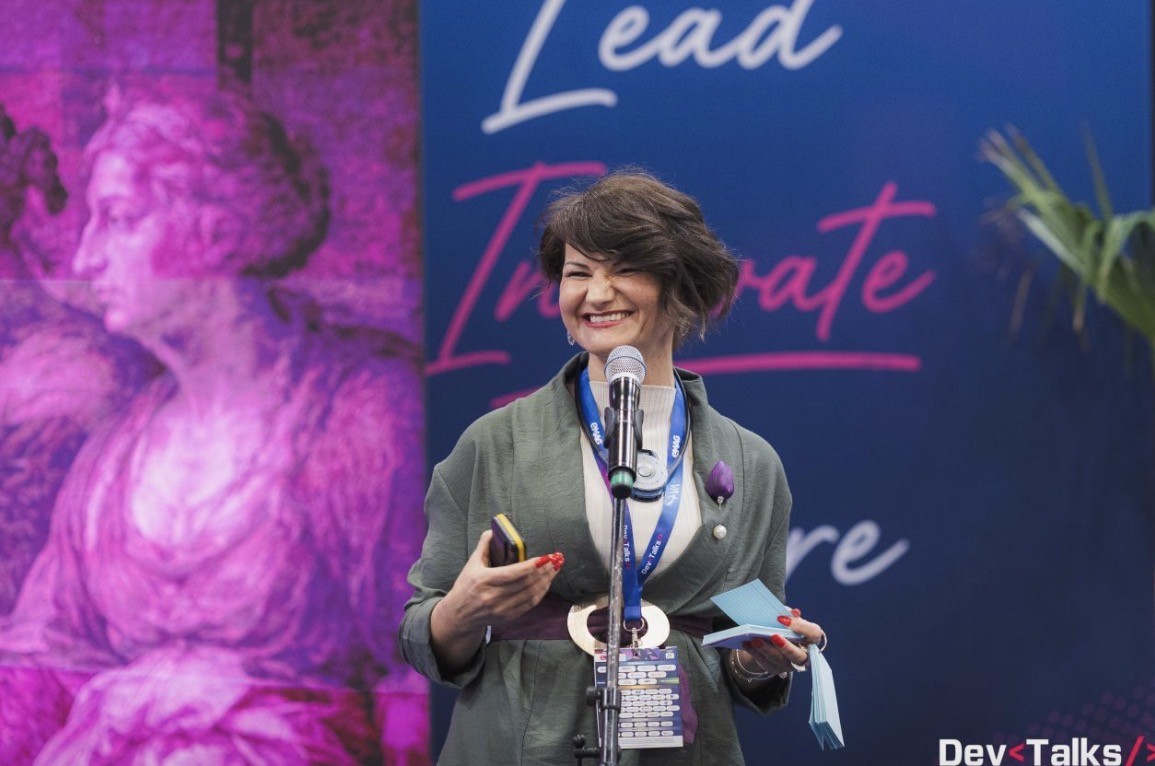
From Purpose to Business Growth
A Conversation with Dr. Giulia R. Tufaro, RDCC Corporate Partnerships Director
Giulia, how did you first meet Lestat Monroe?
Lestat and I first met while I was working at Social Incubator. It began as a professional connection, and we immediately recognised that we shared an interest in creating stronger relationships between companies and organisations working for social impact.
However, we really came closer later, during a dinner Lestat organised at his home as part of his approach to client and relationship development.
It was not a formal business meeting. We started by speaking about Italian cuisine, favourite dishes and the cultural importance of food and hospitality. That very natural conversation created the foundation for a deeper professional exchange.
What struck me was Lestat’s ability to use hospitality not simply as a social gesture, but as a way of bringing people together, creating trust and opening space for ideas and partnerships to develop.
That evening helped us understand how complementary our perspectives could be.
How did a conversation about Italian cuisine become the basis of a professional relationship?
Italian cuisine is about much more than food. It is connected to identity, community, generosity and the relationships built around a table.
As we spoke, the conversation naturally moved towards business, philanthropy, inclusion and the importance of creating ecosystems around people.
Lestat explained that he did not see inclusion as an isolated initiative, a communications exercise or the responsibility of one department. He saw it as infrastructure—something that should influence how companies recruit, procure, innovate, build partnerships and engage with society.
That idea resonated strongly with my own work.
Through Filantropì Renactimento and the ìMedici Institute of Strategic Philanthropy, I have focused on helping organisations connect purpose and social investment with people, culture, reputation, relationships and growth.
We realised that we were approaching similar questions from complementary perspectives. From that point, the relationship developed through continued conversations, shared ideas and a growing sense that we could build something meaningful together.
Was there a specific moment when you began considering joining RDCC?
It developed progressively rather than through one formal discussion.
As I worked more closely with Lestat, I began to understand the scale of the RDCC vision. He was not building only a membership organisation or an events platform. He was developing an ecosystem through which companies could connect inclusion with talent, accessibility, procurement, visibility, partnerships and business growth.
I also saw the organisation’s entrepreneurial capacity. RDCC could identify a gap, bring together the right companies, institutions and experts, and then create a platform or programme to address it.
Over time, it became clear that my experience in strategic philanthropy, corporate engagement and relationship development could contribute to the next stage of that growth.
Joining RDCC allowed me to move from understanding and supporting the vision externally to becoming directly responsible for expanding the corporate community around it.
Why did you ultimately decide to join RDCC?
I joined because RDCC connects purpose and business in a highly practical way.
Many organisations still approach inclusion primarily through values, compliance or communications. These dimensions are important, but RDCC goes further by connecting inclusion with corporate innovation, workforce resilience, responsible procurement, accessibility, leadership and competitiveness.
The Romanian Diversity Chamber of Commerce is a business-driven organisation committed to fostering inclusive economic growth and corporate innovation. It supports companies in integrating fairness and forward-thinking business strategies so they can remain competitive in European and global markets.
Through advisory services, certification programmes and executive training, RDCC equips businesses with the tools to build resilient, diverse workforces and inclusive supply chains. It bridges the gap between inclusion, compliance and business success.
I was not joining simply to promote a cause. I was joining an organisation with a practical platform, specialised services, established partnerships and a strong capacity to create value for companies.
That combination of mission, commercial relevance and growth potential convinced me.
What have you learned from working closely with Lestat?
I have learned a great deal about entrepreneurial leadership and the importance of building relationships before asking people to participate in a project.
Lestat understands that strong partnerships rarely begin with a presentation or a commercial proposal. They begin with trust, curiosity and an understanding of what matters to the other person.
The dinner during which our own relationship developed is a good example of that approach. It created an informal environment in which ideas could emerge naturally.
I have also learned from his ability to see inclusion as infrastructure.
For Lestat, inclusion is not a separate department or a temporary campaign. It is part of the system through which organisations attract talent, select suppliers, develop products, build credibility and respond to changes in society.
He also has a particular ability to connect people and sectors that might not otherwise meet: multinational companies, local businesses, entrepreneurs, NGOs, embassies, international institutions, policymakers and community leaders.
Working with him has reinforced my belief that business development is fundamentally about creating the right connections and turning those connections into shared opportunities.
Has Lestat’s approach influenced how you develop corporate relationships at RDCC?
Yes, particularly in the way I begin conversations.
I do not start with a membership fee or a list of benefits. I begin by understanding the organisation, its people and its priorities.
What is the company trying to achieve? Where is it experiencing difficulty? Does it need access to talent, suppliers, visibility, specialist knowledge, certification or partnerships? Which relationships or platforms could create value for it?
Once that context is clear, I can explain how RDCC’s membership, services and programmes respond to those needs.
The objective is not simply to sell access to RDCC. It is to identify a credible reason for the company to join and then help it activate that relationship throughout the year.
You have now been Corporate Partnerships Director for six months. How would you describe your role today?
My central responsibility is to grow RDCC’s corporate ecosystem.
This means presenting and developing the RDCC membership platform, promoting our services, building strategic partnerships and helping companies identify the most relevant opportunities for their organisation.
I speak with CEOs, HR leaders, ESG and sustainability teams, procurement professionals, communications departments, public-affairs leaders and business-development teams.
Each organisation enters the conversation from a different position.
For one company, the priority may be inclusive recruitment and employer branding. For another, it may be accessibility, responsible procurement, executive visibility, certification, training or stakeholder engagement.
My role is to understand that context and translate the RDCC platform into a relevant business proposition.
I also work with existing members to ensure they understand how to use RDCC actively. My responsibility does not end when a company joins. A successful relationship requires activation, continued engagement and visible value.
What have you learned during your first six months?
I have learned that many companies are genuinely committed to inclusion but do not always know how to transform that commitment into a coherent programme of action.
They may already have policies, targets, employee networks, public commitments or community initiatives. However, these activities are often managed separately.
HR may be working on recruitment and belonging. Procurement may be addressing supplier requirements. ESG may be focused on reporting and compliance. Communications may be looking for credible stories and leadership visibility.
RDCC can connect those priorities.
It offers companies a platform through which they can build capabilities, access expertise, strengthen visibility, reach diverse talent, improve accessibility, develop responsible supply chains and participate in conversations that influence the wider business environment.
The greatest opportunity is often not to create another isolated initiative, but to connect what the company is already doing more strategically.
How does your work in strategic philanthropy connect with what you do at RDCC?
The connection lies in turning purpose into organisational value.
My work has always been based on the idea that purpose should influence culture, talent, reputation, partnerships and growth. It should not remain isolated within a CSR programme or philanthropic budget.
RDCC applies the same principle to inclusion.
Inclusion should not be treated as a separate initiative. It should contribute to how a company recruits, procures, develops leaders, communicates, builds partnerships and remains competitive.
My strategic-philanthropy background helps me approach corporate engagement through a broader lens. I look not only at what a company wants to support, but at how that engagement can strengthen its people, positioning, relationships and long-term performance.
This is also why Filantropì Renactimento’s decision to join RDCC as a Strategic Partner feels so natural. The two organisations share a commitment to moving from intention towards structured action and measurable organisational value.
What does it mean to describe inclusion as infrastructure?
Infrastructure is what allows an organisation or an economy to function.
When inclusion is treated as infrastructure, it becomes embedded in recruitment, workplace design, leadership, procurement, technology, customer experience, communications and partnerships.
It is no longer an occasional campaign or an isolated HR activity.
Accessibility affects whether employees, customers and business partners can participate fully. Inclusive recruitment affects access to talent. Responsible procurement affects supply-chain resilience and market opportunity. Inclusive leadership affects innovation and the quality of decision-making.
This is the logic behind RDCC’s work. We help companies move from general commitments to practical systems, capabilities and relationships that can support long-term business performance.
How does RDCC complement the Diversity Charters across Europe?
The Diversity Charters provide organisations with an important and recognised commitment framework.
For signatories across Europe, they provide awareness opportunities, educational resources and access to European diversity initiatives. Becoming a Charter signatory is an important expression of intention and alignment.
RDCC complements that foundation with a business-driven platform for implementation.
Membership enables companies to activate their commitments through inclusive recruitment, accessibility, responsible procurement, advisory services, certification, executive training, partnerships, visibility and leadership engagement.
The relationship should therefore be understood as complementary.
A Diversity Charter provides a recognised commitment framework. RDCC helps organisations translate that commitment into practical, visible and commercially relevant action.
RDCC also provides an affiliate membership route for active Carta Diversității signatories, reflecting this progression from public commitment to implementation.
How do you explain the business value of RDCC membership?
I focus on the outcomes the platform can support.
The first is visibility: helping companies and their leaders become recognised contributors to inclusive economic growth.
The second is capability: providing access to training, certification, audits, tools and specialist guidance.
The third is talent: strengthening employer branding, job visibility and inclusive recruitment.
The fourth is procurement: creating access to responsible procurement conversations, diverse suppliers and business-matching opportunities.
The fifth is influence: enabling participation in working groups, advocacy, policy dialogue and leadership opportunities.
The objective is not participation for its own sake. It is to create a year-round platform through which companies can strengthen their position, relationships and internal capabilities. These five areas of return are central to RDCC’s current membership proposition.
What does the first year of RDCC membership look like for a corporate member?
It should begin with clarity.
For Sustaining and Founding Corporate Members, the relationship starts with a dedicated onboarding discussion to understand the company’s priorities, identify the relevant internal teams and define where RDCC can create the greatest value.
From there, we can build an engagement pathway around the company’s objectives.
That may include participation in relevant working groups, introductions across the RDCC network, visibility through our communication channels, access to conferences and programmes, executive speaking opportunities, job promotion, responsible-procurement engagement or specialist services such as training, certification and accessibility support.
A company may initially join because of one priority—for example, employer branding—and then discover additional opportunities in procurement, executive visibility, partnerships or accessibility.
The intention is to ensure that membership becomes an active platform rather than a passive affiliation.
Which parts of a company can benefit from working with RDCC?
RDCC is relevant across the organisation.
For HR and talent teams, it offers inclusive recruitment, employer branding, job visibility, training and specialist support.
For procurement teams, it provides access to responsible procurement, supplier-diversity conversations and inclusive supply-chain opportunities.
For ESG and sustainability teams, it supports implementation, certification, stakeholder engagement and measurable inclusion activity.
For communications and corporate-affairs teams, it offers credible visibility, content, leadership positioning and participation in established platforms.
For business-development teams, RDCC creates networking, introductions and cross-sector partnership opportunities.
For senior executives, it offers opportunities to contribute to policy dialogue, thought leadership and conversations with other business and institutional leaders.
That cross-functional relevance is one of RDCC’s strongest advantages.
Can you give an example of how one company might use RDCC across several business priorities?
A company may first approach RDCC because it wants to improve its employer brand and reach more diverse talent.
Through the relationship, it could promote vacancies through RDCC’s recruitment platforms, involve its HR team in inclusive-recruitment programmes and position one of its senior leaders in a relevant public discussion.
At the same time, its procurement team could explore RDCC’s sustainable and inclusive procurement ecosystem, while its workplace or facilities team could access accessibility guidance or an audit.
Its communications team might then use one of RDCC’s flagship platforms to demonstrate credible action, rather than communicating only a general commitment.
The value comes from connecting these areas. What begins as a talent conversation can become a broader relationship involving capability, visibility, procurement, leadership and stakeholder engagement.
What evidence shows that RDCC can translate this vision into action?
RDCC has already built a substantial corporate and institutional ecosystem.
According to RDCC’s 2025 impact overview, the Chamber brought together 50 corporate members representing more than 80,000 employees in Romania, mobilised 71 speakers from business, civil society and public institutions, delivered 12 flagship events and developed three international collaborations and MoUs.
AccessABILITY Expo 2025 brought together more than 55 exhibitors from Romania and Europe, generated more than 100 media mentions and reached a reported national audience of more than 4.6 million people.
These figures matter because they demonstrate that RDCC is not only discussing inclusion. It is creating platforms through which companies can participate, lead, connect and become visible.
How can companies use RDCC’s flagship platforms strategically?
Our flagship platforms allow companies to activate their membership around specific business objectives.
AccessABILITY Expo supports accessibility leadership, innovation, solution visibility and engagement with the disability-inclusion ecosystem.
Opportunity Job Hub supports employer branding, job visibility and inclusive recruitment.
Purple Night Romania allows organisations to participate in a nationally visible disability-inclusion campaign.
The Romanian Diversity Awards provide recognition and leadership positioning.
RDCC’s policy and advocacy activity enables companies to participate in dialogue with institutions, businesses and civil society.
These platforms should not be treated as isolated event or sponsorship opportunities. They can form part of a company’s annual strategy for talent, reputation, accessibility, stakeholder engagementand market positioning.
Your relationship with Lestat began through a conversation about Italy. Is that connection also relevant to RDCC’s future development?
There is certainly a personal dimension to it.
Italy is deeply connected to my identity and to the work of Filantropì Renactimento and the ìMedici Institute. It is therefore especially meaningful that Italy is set to become the first affiliated RDCC chamber in Europe.
This represents an important step in RDCC’s international development. It will extend the organisation’s business-driven model into another European market while preserving strong local leadership and a close connection to the wider RDCC ecosystem.
Italy has a dynamic corporate, entrepreneurial and civil-society environment. Many organisations are looking for practical ways to connect inclusion with talent, innovation, responsible growth and competitiveness.
The affiliated chamber can also create new opportunities for organisations in Romania and Italy, including cross-border partnerships, knowledge exchange, corporate visibility and engagement with a broader European network.
What else is coming next for RDCC?
RDCC is entering a significant period of growth.
The opening of the first affiliated RDCC chamber in Italy will mark the beginning of a wider European development model and create new opportunities for corporate collaboration and knowledge exchange.
At the same time, we are involved in discussions about bringing a major international platform focused on technology, creativity, innovation and the next generation of talent to Romania.
It is too early to reveal the full details, but the ambition is substantial.
Such a platform could create a new bridge between companies, universities, young talent, entrepreneurs and international innovation ecosystems.
These discussions demonstrate that RDCC’s next phase will not be limited to membership growth. It will connect inclusion with international development, innovation, skills and economic opportunity on a much broader scale.
How do these future plans influence your conversations with companies today?
They make this a particularly interesting moment for organisations to become involved.
Companies engaging with RDCC today are joining an established platform, but they are also entering during a period of expansion.
For Sustaining and Founding Corporate Members in particular, this can create opportunities for early involvement, strategic visibility, cross-border relationships and participation in emerging international initiatives.
The RDCC platform is becoming broader in ambition, geographic reach and commercial relevance.
That means the conversation is not only about the benefits available today. It is also about the opportunities companies may be able to help shape tomorrow.
When you look at companies today, where do you see the greatest untapped opportunity?
Many organisations already have strong commitments, capable teams and ambitious policies. The untapped opportunity is often in connecting those elements more strategically.
A company may be investing in inclusion, recruitment, accessibility, community engagement or responsible procurement, but these activities may still be managed separately.
When they are connected, they can strengthen employer reputation, leadership visibility, supplier relationships, innovation and long-term competitiveness.
This is where RDCC can create distinctive value. We bring together the expertise, platforms, relationships and implementation tools that allow companies to move from individual initiatives towards a more coherent business strategy.
The most interesting conversations are often those in which an organisation initially sees one reason to engage with RDCC and then discovers several additional opportunities across talent, procurement, visibility, partnerships or international development.
For me, that is the real strength of the platform: helping organisations recognise possibilities that may not have been visible from inside the business.
About Dr. Giulia R. Tufaro
Dr. Giulia R. Tufaro is Corporate Partnerships Director at the Romanian Diversity Chamber of Commerce, Managing Director of Filantropì Renactimento and Founder of the ìMedici Institute of Strategic Philanthropy.
Her work focuses on connecting purpose and social investment with organisational culture, talent, reputation, partnerships and long-term value.
At RDCC, she leads corporate membership development, strategic partnerships and the promotion of RDCC’s services and platforms, helping companies identify and activate the opportunities most relevant to their business priorities.
About the Romanian Diversity Chamber of Commerce
The Romanian Diversity Chamber of Commerce is a business-driven organisation committed to fostering inclusive economic growth and corporate innovation.
RDCC supports companies in integrating fairness and forward-thinking business strategies to remain competitive in European and global markets.
Through advisory services, certification programmes and executive training, RDCC equips businesses with the tools to build resilient, diverse workforces and inclusive supply chains.
As a strategic partner to multinational corporations, local enterprises and policymakers, RDCC bridges the gap between inclusion, compliance and business success.
Dr. Giulia R. Tufaro
Corporate Partnerships Director
Romanian Diversity Chamber of Commerce
contact@rdcc.ro
www.rdcc.ro